
Supply Chain
Debate worth having: can Europe's parcel lockers ever share one network?
Louis Boroditsky — 01 October 2026
5 min read
24 June 2026
Supply chains are under constant pressure to move goods faster and cheaper. And the final stretch is often the most complicated and expensive part of the journey.
Unpredictable events such as equipment breakdowns, natural disasters and changes in consumer demand can trigger serious delays and increase costs.
But recent advancements in physical AI are creating new solutions for these problems.
By combining artificial intelligence with physical machinery, this technology enables systems to learn from their environment, solving problems faster and more efficiently.
Traditional systems often fail to adapt to sudden disruptions on the road or in the warehouse.
Physical AI tackles this issue by introducing maps that think and respond to real-time challenges, processing live data to find the best possible routes and operational strategies on the go.
As a result, companies can predict delays before they happen and reroute shipments without human intervention. This active problem-solving approach reduces wasted time and keeps the entire supply chain moving smoothly, from start to finish.
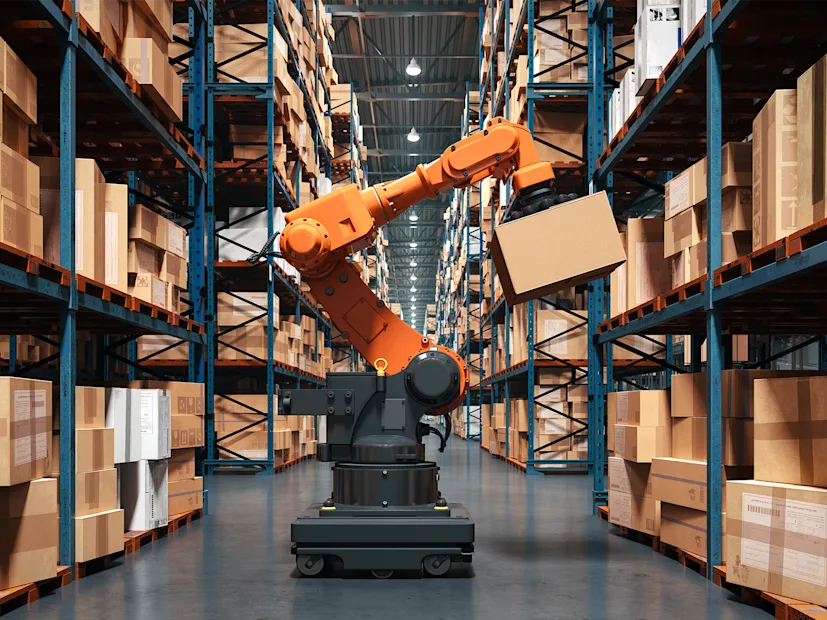
Applied to the modern warehouse, physical AI completely transforms how inventory moves and sits on the shelves.
For instance, automated robots use dynamic mapping to navigate crowded aisles and locate specific packages with pinpoint accuracy. These machines learn the layout of the facility and constantly adjust their paths to avoid collisions with other robots or human workers, speeding up the picking and packing process.
It helps humans too. By tracking inventory in real time, managers have full awareness of exactly what is in stock and where it is stored, all the time.
This level of visibility cuts down on lost items and helps businesses maintain the right amount of stock, fueling an immediate reduction in operational waste and a boost in overall efficiency.
In addition to warehouse optimization, physical AI addresses last-mile delivery challenges by optimizing neighborhood routes and coordinating smart delivery vehicles. These thinking maps analyze local traffic patterns and delivery windows to ensure packages reach customers exactly when promised.
Moving goods from the warehouse to their final destination can be tricky. Because smooth transportation requires precise coordination and reliable data.
This is where location technology plays a vital role. By connecting physical AI to the real world, solutions such as HERE UniMap allow automakers and enterprises to guide their mixed fleets through complex road networks.
The platform delivers automotive-grade location data that helps fleet managers optimize routes based on live traffic, road geometry and weather conditions. Vehicles equipped with physical AI use this rich map data to adjust their driving patterns and save fuel.
This integration of advanced mapping and smart vehicles means fleets operate with increased safety and punctuality.
Other solutions that support physical AI in making deliveries as reliable, safe and punctual as possible include:
HERE Real-time Traffic, which provides real-time traffic data, helping drivers and fleet managers avoid congestion and improve efficiency.
HERE Routing, which offers powerful planning tools that consider live traffic, road restrictions, and delivery windows for precise logistics.
For electric vehicle fleets, HERE EV Charge Points provides detailed information about nearby charging stations.
In a nutshell, combining physical AI with advanced location technology can optimize delivery operations in unprecedented ways.
Despite clear benefits, bringing physical AI into an existing supply chain doesn't come without challenges—particularly some very specific ones.
The initial cost of upgrading warehouses with smart robots and outfitting fleets with advanced sensors can be high. Businesses must carefully weigh these upfront expenses against the long-term savings gained through improved efficiency.
Data privacy acts as another major concern for companies collecting massive amounts of location and operational information. Protecting this sensitive data from breaches requires strict security protocols and robust encryption methods.
Additionally, the integration of these technologies demands a skilled workforce capable of managing and maintaining such advanced systems.
This often requires significant investment in employee training and development programs to ensure a smooth transition. And then there's the obligatory "stay updated on evolving regulations surrounding technology and data usage", as non-compliance can lead to legal complications and penalties.
The continuous learning loop of physical AI means that every successful delivery improves the system for the next run.
This ongoing improvement creates a supply chain that grows smarter and more resilient every single day.

Maja Stefanovic
Senior Writer
Share article
Louis Boroditsky — 01 October 2026
Louis Boroditsky — 24 August 2026
Louis Boroditsky — 04 August 2026
Why sign up:
Latest offers and discounts
Tailored content delivered weekly
Exclusive events
One click to unsubscribe