
Supply Chain
Debate worth having: can Europe's parcel lockers ever share one network?
Louis Boroditsky — 01 October 2026
7 min read
17 December 2025
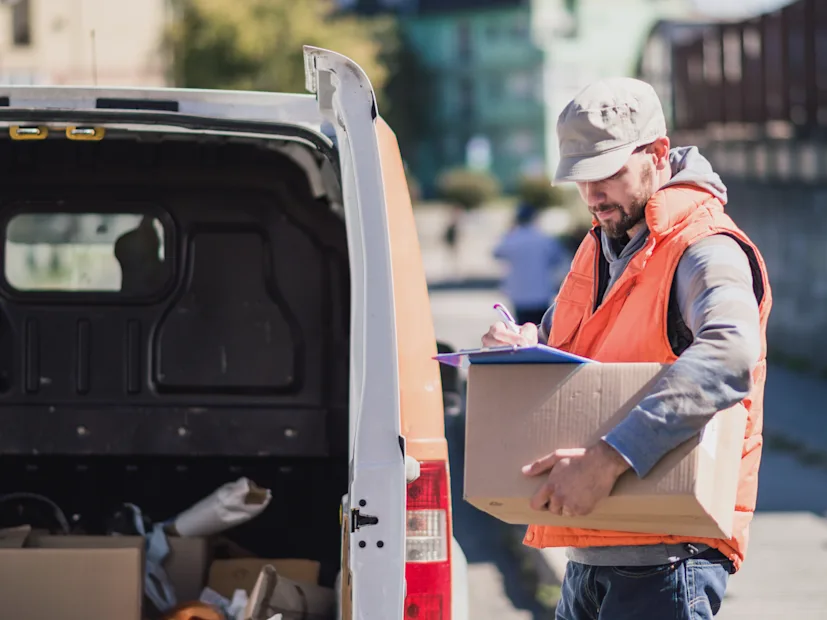
As the final stage in the journey, the last mile is often the most expensive and complex part, accounting for as much as 50% of the distribution cost. At its core, though, is an increasing desire for speed and sustainability—from consumers, industry and governments.
But last-mile costs are rising. According to the Last-Mile Delivery: The Future Unpacked report by packaging company DS Smith, 84% of eCommerce businesses surveyed reported a rise in costs in the past 12 months. Furthermore, half of them expect double-digit increases to their last-mile delivery costs in the year ahead.
“Moving a product from the warehouse to the doorstep in under 24 hours isn’t as simple as it looks,” the London Maritime Academy said in an article about last-mile logistics. And we couldn’t agree more.
“Fortunately, technology has responded,” it added. “Tracking platforms, dynamic routing software and smart planning tools help providers optimize routes, avoid bottlenecks and manage volume across networks.”
With this in mind, let’s take a look at four key trends shaping the last mile that can help boost efficiency and reduce costs at this crucial stage in the logistics journey.
In 2025, it would be easier to name the industries not impacted by AI than those that have been. The last mile is no exception… for the better. AI is already heralding more resilient supply chains, from route optimization and demand forecasting to risk management and predictive maintenance.
Advances in AI and real-time location technology are now proving essential in keeping supply chains running like clockwork while helping businesses move from a reactive to a proactive logistics strategy.
“By harnessing advanced algorithms and real-time data analysis, AI empowers businesses to anticipate disruptions, enhance safety and improve efficiency across the supply chain,” said Anthony Michael, Senior Practice Director at Searce, a cloud technology consultancy.
When combined with deep location data and real-time insights, AI’s predictive capabilities help businesses respond efficiently to disruptions as well as predict—and mitigate them—before they get out of control.
“One of the most impactful applications is predictive analytics,” added Michael. “By analysing historical data and external factors like weather patterns, traffic conditions and geopolitical risks, AI can forecast supply chain bottlenecks before they occur. This allows businesses to proactively adjust routes, optimise inventory levels and avoid costly delays.”
Unfortunately, unpredictability is part and parcel of last-mile delivery, from delayed shipments to weather events. So being able to track goods—down to individual loads or packages—is crucial to maintaining momentum. Efficiency increasingly comes from visibility today.
Earlier this year, HERE teamed up with Sensos to collaborate on smart sensors, credit-card-sized labels that can be attached to high-value products. When combined with HERE’s highly reliable location technology, these packages can be tracked throughout the entire supply chain via HERE Tracking.
And with an extended battery life of up to three years, they are ideal for tracking equipment that travels extensively. The smart labels are also equipped with a wide range of advanced sensors and connectivity options, allowing them to share not just location data but information about temperature, humidity and more.
For a global equipment provider—which transports specialized tools worth millions of euros—the location-enhanced sensors are already solving some of its early challenges, notably the short battery life of previous trackers as well as distribution inefficiencies.
Tracking individual high-value items is one thing, but being able to monitor entire freight from ship to shore to shop is another. Shipping giant Hapag-Lloyd wanted to better monitor its containers once they left the depot, giving customers live location information to improve fulfilment and reduce frustrations.
“Inland transportation isn’t just an add-on. It’s one of our key focus areas,” said Karsten Schmidt, Director of Live Position and Track and Trace at Hapag-Lloyd.
The answer: 1.6 million Internet of Things (IoT) trackers for its containers, providing updates every 15 minutes with an impressive coverage of 97-98%. Like the Sensos labels, they can also transmit variables such as temperature, so you can flag any issues in advance.
“Tracking containers in real-time is crucial because it helps us see exactly where they are, even when disruptions occur,” added Schmidt.
Once the delivery is en route, finding the exact drop-off point is vital—it’s no longer enough to deliver to an address these days.
“Precision means ensuring packages reach the exact unit in an apartment complex, the correct locker or a specified safe place,” explained Bart Coppelmans, HERE’s Senior Director of Product Management.
However, this degree of accuracy is challenging, from decoding sub-addresses to finding the right entrance and even following special delivery instructions.
“One big step forward here is micro-point addressing,” Coppelmans added. “By tying sub-address data to main addresses, companies can plan with a level of accuracy they’ve never had before.”
Such efficiency doesn’t just come from real-time or predictive analytics, argues Coppelmans, but the convergence of historical data. “Using location intelligence to spot patterns—like where drivers usually park or which building entrances they use most—can make a huge difference in efficiency,” he added.
The power of location technology extends beyond optimizing package tracking and delivery schedules, too. With more and more fleets adopting sustainable transport initiatives, location tools can help fleets operate as efficiently as possible.
Inefficient routes, traffic and weather conditions, unexpected road closures and local regulations can all have a significant impact on your delivery schedule, leading to higher fuel costs and delayed shipments. However, smarter route planning—which starts with location intelligence—can help mitigate the challenges.
For instance, HERE’s fleet solutions use advanced AI techniques to optimize route planning, helping identify the most efficient delivery routes. It also works with mixed fleets, so whether companies use a mix of electric and traditional vehicles, the system makes it seamless to plan routes that consider EV range, charging needs and operational efficiency.
“With more businesses adopting electric fleets, we make sure they can integrate seamlessly into daily operations,” Coppelmans said.
From basic tracking to rich, predictive insight, location intelligence is revolutionizing the last mile. Companies are now able to not just understand where their assets are at any given moment but also monitor and even predict future delays. And by optimizing routes, businesses not only cut costs, improve sustainability and keep deliveries on track, but also improve customer trust and satisfaction, too.

Ian Dickson
Contributor
Share article
Louis Boroditsky — 01 October 2026
Louis Boroditsky — 24 August 2026
Louis Boroditsky — 04 August 2026
Why sign up:
Latest offers and discounts
Tailored content delivered weekly
Exclusive events
One click to unsubscribe