Supply Chain
Striking distance: why Australia's trucks keep hitting bridges
Louis Boroditsky — 24 August 2026
8 min read
01 October 2026
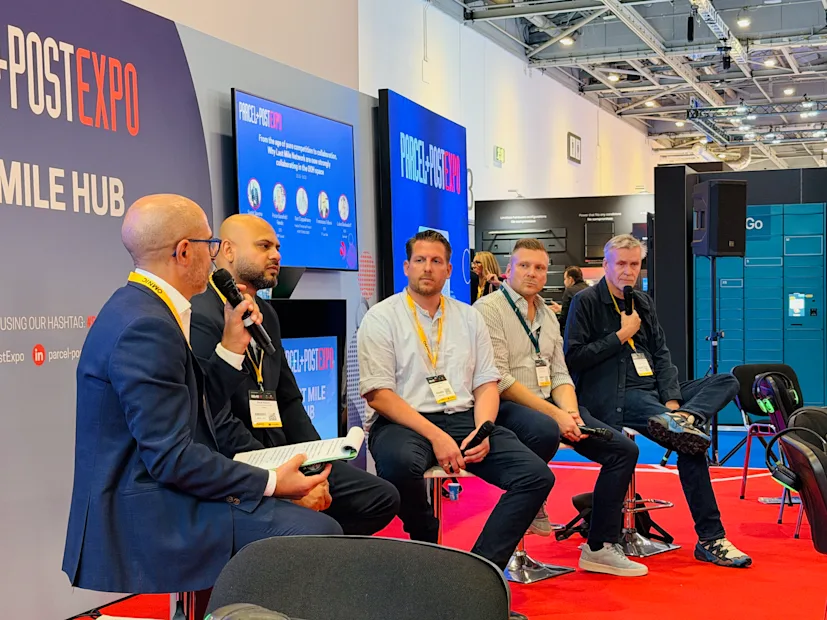
“What I'm dreaming of is a network that keeps growing more complex, with us, as a technology company, helping to keep it as organized and efficient as possible," said Bart Coppelmans, Head of Enterprise Product at HERE Technologies. That tension, between growing complexity and the push for efficiency, shaped the entire panel.
Francesco Tribuni, CEO of the consultancy FT Last Mile, kicked off the session with a bold message: the idea of every parcel brand running its own locker network is dead. In his view, mergers, open networks and new players with private capital behind them have split the market into three camps: closed, carrier-agnostic and collaborative.
Lukas Beckedorff, CEO of German parcel locker network Deinfach, agreed. His carrier-agnostic network has grown to around 1,700 lockers in Germany by working with several carriers instead of just one.
Peter Bonefeld Rønde, CEO at PBR Consult, said the industry's real gap isn't the lockers themselves but the software behind them. Carriers have spent a decade building systems that don't talk to each other, he argued, and that's now getting in the way of the partnerships everyone needs.
Beckedorff disagreed a little, saying the problem starts even earlier. "As long as our carriers are not harmonizing the processes, it's tough to have one standardized software," he said. In his view, the real fix is getting carriers to line up their customer journeys, not hunting for one tool that does it all.

“What I'm dreaming of is a network that keeps growing more complex, with us, as a technology company, helping to keep it as organized and efficient as possible," said Bart Coppelmans, Head of Enterprise Product at HERE Technologies.
Sumit Saxena, Senior Vice President EMEA at logistics software company FarEye, said cost is what drives most locker strategies, but convenience decides whether shoppers actually use them. He described technology that can decide on the spot whether a parcel should go to a locker or straight to someone's door, depending on how dense the area is and what people there tend to do.
Coppelmans agreed that no one answer works for everyone. He noted that territory planning and route optimization solutions can help carriers decide where lockers best fit the network by balancing customer convenience with stop density, capacity and efficient routes. "If I need to take a ten-minute detour to pick up a parcel, I wouldn't do that," he said.
Saxena added: "The ‘slipper distance’ matters. If the locker is on the way to buy milk or bread, that's when it works. If it's beyond, adoption drops."
Bonefeld Rønde pointed to a shift that's already happening: retailers building their own out-of-home networks instead of renting space in ones owned by carriers. The payoff, he argued, isn't only more people through the door. It's loyalty, since shoppers who pick up parcels in-store may keep coming back to the same retailer online.
Coppelmans asked why retailers wouldn't just plug into existing networks rather than build their own. Bonefeld Rønde answer was simple: retailers want the foot traffic for themselves.
Saxena said the ongoing global disruption is squeezing carrier margins across Europe, which is nudging governments to back cheaper ways of delivering parcels, like lockers, over dropping them at the front door.
Beckedorff wasn't convinced it would happen quickly. He expects any real change in pricing to take until 2027, since these markets are regulated and customer contracts run for a long time.
Coppelmans took a slightly different view, arguing that the bigger driver of efficiency has been the move to electric and mixed fleets, supported by EV fleet planning and routing tools. "I'm not sure that these global events are going to create a huge short-term effect on the current network," he said.
Tribuni asked the panel straight out whether rival carriers might one day share delivery vans featuring multiple brand logos on the side, especially in rural areas where there aren't many parcels to go around. Coppelmans said the real opportunity is in coordinating deliveries, not in putting everything in one shared vehicle.
"It's more about the value unlocked by orchestration, not only a mode shift to a certain node," he said. He pointed back to territory and sector management services for flexible, demand-based planning, alongside broader route optimization solutions for turning those territories into efficient daily routes as demand and constraints change.
Bonefeld Rønde predicted that shared logistics would catch on sooner for returns than for outbound deliveries, since returns aren't nearly as time-sensitive.

HERE's Bart Coppelmans at Parcel & Post Expo 2026 in London, UK.
Tribuni pointed out that self-driving delivery vehicles already carry millions of parcels every week in China, and asked whether Europe could follow. Coppelmans was doubtful about the last leg of the journey, even though HERE is a major provider of autonomous driving solutions in other markets. "You still need somebody taking the parcel out of the vehicle and putting it into the locker. That's not going to be autonomous," he said.
Saxena agreed there's no one-size-fits-all answer, arguing that convenience, not any particular technology, should always shape the delivery approach.
No one on stage claimed to have solved out-of-home delivery. What came through instead was a shared sense that the old model of one carrier, one network and one locker brand no longer fits a market shaped by regulation, cost pressure and changing customer habits.
Shared software, retailer-run networks and orchestration platforms all have their backers, and the panel didn't pick a winner. What they did agree on is that the current setup won't hold for long. Territory and route optimization will both be central to what comes next: one helps carriers design and rebalance service areas, while the other converts those plans into efficient routes across lockers, homes and other delivery points.
Yes. Panelists at the Parcel & Post Expo agreed that dedicated, single-carrier locker networks are giving way to open, agnostic and collaborative models across Europe.
Views differed. Bonefeld Rønde pointed to a lack of shared software between carriers, while Beckedorff argued the deeper issue is unharmonized delivery processes across companies.
Convenience and timing matter more than cost alone. Saxena and Coppelmans both noted that locker use rises when pickup fits naturally into a shopper's daily routine.
Not yet, according to Coppelmans, who said someone still needs to physically move a parcel from vehicle to locker, a task automation has not solved.
HERE provides location-based tools that connect strategic delivery planning with daily operations, through a dynamic feedback loop. A route plan is great on paper, but things can disrupt that route quickly. That’s where HERE connects the back-office with what’s really happening in the field for continuous delivery improvement.

Louis Boroditsky
Managing Editor, HERE360
Share article
Louis Boroditsky — 24 August 2026
Louis Boroditsky — 04 August 2026
Maja Stefanovic — 24 June 2026
Why sign up:
Latest offers and discounts
Tailored content delivered weekly
Exclusive events
One click to unsubscribe