
Supply Chain
Debate worth having: can Europe's parcel lockers ever share one network?
Louis Boroditsky — 01 October 2026
11 min read
24 August 2026
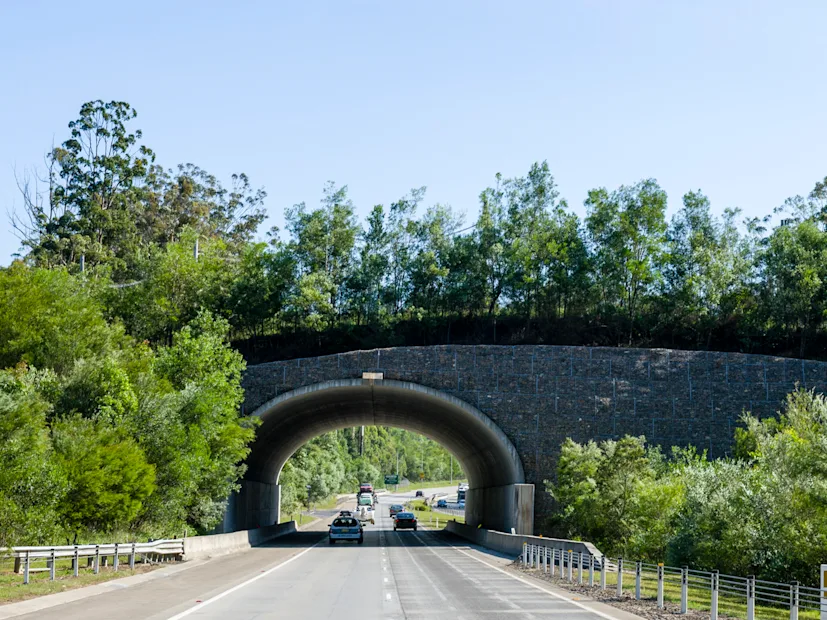
The inner-city suburb of South Melbourne is best known for its gold-rush-era roots and the historic South Melbourne Market, a magnet for foodies.
It is also home to the infamous Montague Street Bridge, affectionately dubbed "Monty Balboa" by locals. Despite its clearance of just three meters and more than 25 warning signs, trucks continue to hit Monty—so often that the controversial bridge has its own website, How Many Days Since Montague Street Bridge Has Been Hit?
Monty even has its own X account, with more than 14,000 followers documenting each new collision. The bridge's notoriety peaked in 2016, when bus driver Jack Aston crashed his 3.8-meter-high coach into the bridge, injuring six passengers.
But what makes Monty remarkable isn't just its strike count. It's what the bridge represents: the failure of sign posted warnings alone to change driver behavior. According to Daniel Antonello, General Manager, Oceania, at HERE Technologies, that failure is now well established.
"The landscape itself shaped the infrastructure and changing it was deemed too costly," Antonello told HERE360. "So the decision was made to add more warnings instead. But the warnings don't work. The years of data prove it."
According to a new report commissioned by HERE and the Australian Logistics Council (ALC), and independently researched by economic consulting firm HoustonKemp, approximately 1,220 bridge strikes occurred in Australia in the financial year 2024–2025. That figure has risen by around 38% since 2018 and is projected to climb to roughly 1,500 incidents per year by 2035 if no meaningful action is taken.
The sheer pace at which incidents accumulate is staggering. In April 2024, south-east Queensland recorded nine bridge strikes in just 48 hours—prompting Queensland Rail to issue an urgent warning to drivers of over-height vehicles.
Queensland Rail has invested A$15.5 million (about US$10.1 million) installing protection beams across 14 high-priority bridges in south-east Queensland. Yet even with that infrastructure in place, the blitz continued. The protection beams buy time; they don't solve the problem.
The economic toll is substantial. Bridge strikes cost the Australian economy an estimated A$101 million (about US$70.4 million) in 2025. The weighted average cost per incident sits at approximately A$82,500 (about US$57,600), though catastrophic events can exceed A$6 million (about US$4.2 million). Even lower-severity incidents carry a sting: protection beam strikes—where vehicles hit protective structures installed ahead of bridges—account for more than half (54%) of total costs, driven by their sheer frequency. The estimated cost of each protection beam strike alone is A$56,824 (about US$39,600).
Critically, the impact doesn't stop with fleet operators. More than 40% of total costs are borne by the broader community through rail delays, traffic congestion and emergency response.
"Bridge strikes are often perceived as isolated events," said Antonello. "But our findings show they are a systemic issue with far-reaching economic and societal consequences. As freight volumes continue to grow, so too will the cost of inaction."
The problem is geographically concentrated: 97% of incidents occur along Australia's east coast, with Sydney, Brisbane and Melbourne accounting for roughly 70% of the population. New South Wales bears 34% of total costs, followed by Queensland at 32% and Victoria at 29%. Victoria, however, has a higher cost per strike due to a greater concentration of severe incidents.
The causes aren't always what people assume. "The majority of these incidents is caused by the load, not the truck," Antonello explained. "You have to remember there's a truck canopy, and then there's a load that sits on the back. A lot of times it's the load that hits the bridge: an excavator with a big arm, a piece of freight with a huge frame." In many cases, the clearance difference is just 10–20 centimeters—a margin that's almost invisible on a large vehicle.
Driver distraction and a lack of awareness about vehicle or load dimensions are key factors. Yet truck dimensions aren't part of Australia's mandatory pre-trip checklist for all commercial vehicles. "Truck drivers, by law, have a checklist of things they have to do before they go," Antonello said. ”What we're advocating for is greater focus on the vehicle dimensions and load as part of the pre-trip checklist for all commercial vehicles. Because if the driver were to know their dimensions and use the navigation system that was given to them, it would solve this problem."

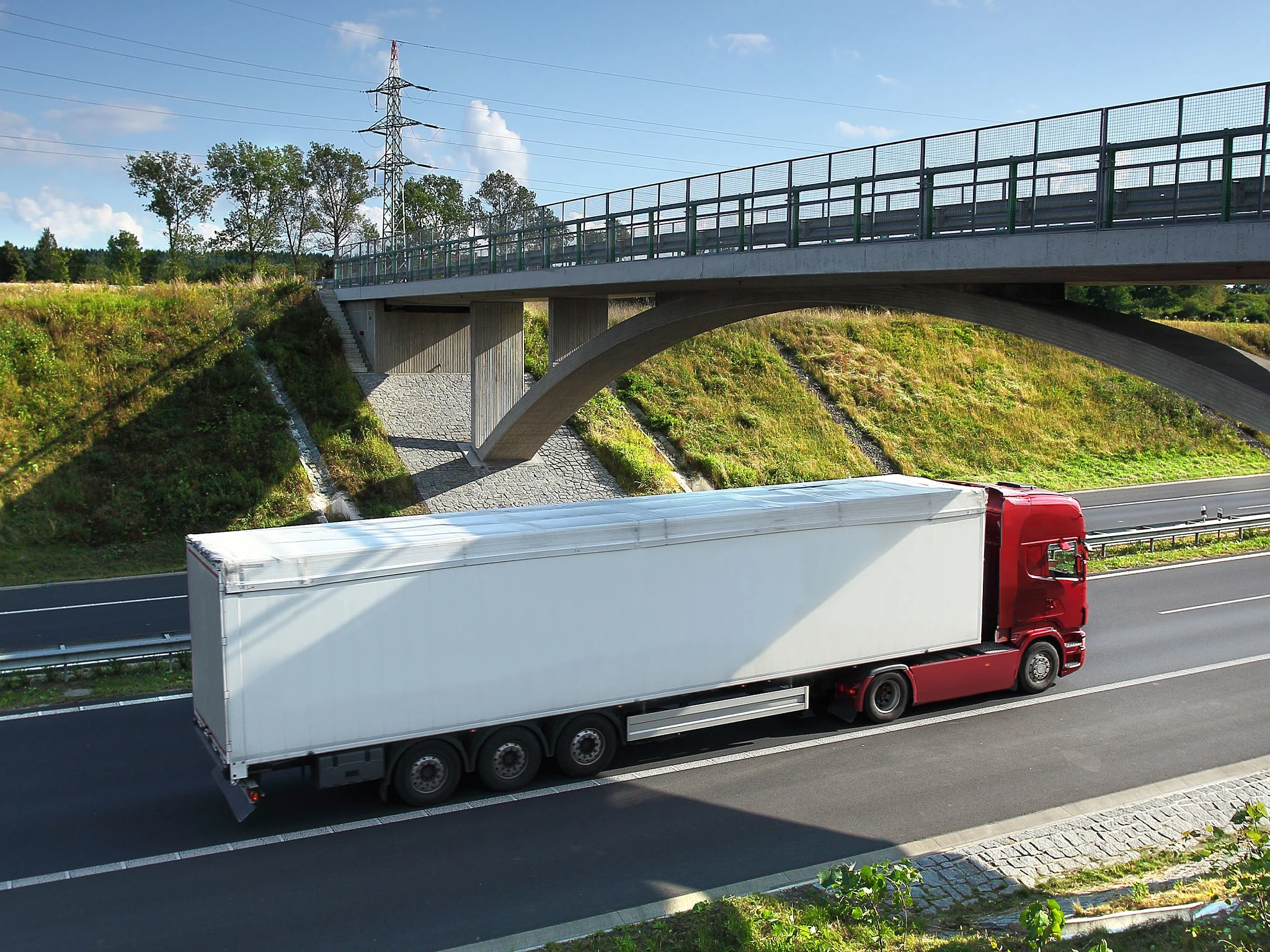
Two B-double road trains parked at a rest stop along the Mulligan Highway in Far North Queensland, Australia.
These large truck combinations, which consist of a prime mover pulling two trailers, are a common sight on Australia’s freight routes and help move goods across the country’s vast distances more efficiently.
The fix isn't more signs or more protection beams. It's smarter routing, real-time data and in-vehicle intelligence that does what passive warnings cannot: reach the driver at the right moment, with the right information, before a strike occurs.
HERE has mapped more than 29,000 vehicle height restrictions across Australia—3.6 times more height restrictions than petrol stations in the country. Globally, HERE's map covers vehicle height restrictions across 120 countries and territories, giving fleet operators and software developers the data foundation they need to build meaningful prevention tools.
Three HERE products sit at the center of that solution: |
|---|
provides the underlying layer of truck-specific restrictions—bridge heights, weight limits and hazardous materials routes—covering more than 200 countries. |
HERE Routing builds on that data to support commercial vehicle-specific rules and regulations, enabling route customization based on vehicle height, weight, axle count and cargo type. |
HERE WeGo Pro brings it all together as a complete truck navigation app for professional drivers, routing vehicles based on their specific physical and legal constraints. |
"HERE WeGo Pro uses the vehicle's height, weight and length to calculate routes that work both physically and legally," Antonello said.
Making that tool more accessible and widely adopted, he argued, would represent a significant step toward reducing incidents. Had the drivers responsible for those nine Queensland strikes in April 2024 been using a purpose-built truck navigation tool rather than a consumer app, several of those incidents may never have happened.
Geofencing offers another layer of protection in a simplified way. By creating active warning zones around height-restricted structures, alerts can be triggered inside the vehicle cabin before it is close enough to cause damage. According to HERE's research, geofencing height-restricted infrastructure and implementing active warning systems is estimated to reduce bridge strikes by 50–80%. When integrated into fleet management platforms and back-office route planning tools, the effect compounds: consistent, safe journeys become the default rather than the exception.
Bridge strikes are preventable. That's not an aspiration. It's a conclusion supported by data, by case studies and by real-world incidents.
"I spend a lot of my time advocating for change, lobbying with different government and industry leaders," Antonello said. "Everyone agrees this is a hot topic, but it’s not big enough yet to make a governmental move on it. That's the issue."
The economic case is clear: A$869 million (approximately US$607 million) in projected net present value costs over the next decade, a 38% rise in incidents since 2018 and more than 1,200 strikes each year. Yet many of these incidents are avoidable with technology that already exists. The challenge now is turning that technology into action—using the data and tools available today to make Australia's freight network safer.

According to a report by HERE Technologies, the Australian Logistics Council and HoustonKemp, approximately 1,220 bridge strikes occurred in Australia in FY2025. That figure has risen by around 38% since 2018 and is projected to reach roughly 1,500 incidents per year by 2035.
Bridge strikes cost the Australian economy an estimated A$82,500 (about US$57,600), though severe events can exceed A$6 million (about US$4.2 million). More than 40% of total costs are borne by the broader community through rail delays, congestion and emergency response expenses.
The main causes include inattentive driving, a lack of awareness about vehicle or load height, and the use of consumer navigation apps not designed for commercial vehicles. Contrary to common assumptions, the load—rather than the truck cabin—is often what strikes the bridge.
97% of bridge strikes occur along Australia's east coast, concentrated in the urban freight corridors of Sydney, Brisbane and Melbourne. These cities collectively account for roughly 70% of Australia's population and the highest density of height-restricted infrastructure.
Truck-specific routing, geofencing around height-restricted structures and in-vehicle height warning systems can significantly reduce incidents. Research cited in HERE Technologies' report suggests that geofencing height-restricted infrastructure and implementing active warnings can reduce bridge strikes by 50–80%.
HERE Map Data covers vehicle height restrictions across more than 120 countries and territories. HERE Routing supports commercial vehicle-specific rules including height, weight and width restrictions. HERE WeGo Pro is a professional truck navigation app that routes vehicles based on their physical and legal constraints.
Warning signs are passive—they rely entirely on driver attention at a specific moment. As the repeated strikes at Melbourne's Montague Street Bridge demonstrate, even 25 or more signs are insufficient when drivers are distracted, unaware of their load dimensions or simply unfamiliar with the route. Active, integrated technology that intervenes before a driver reaches a restricted structure addresses the problem at its source.
Australia's National Heavy Vehicle Regulator (NHVR) framework includes mass and dimensions and puts the responsibility on the operator. NHVR captures trucks over 4.5T for all states except NT and WA. The do not cover state-based regimes, light commercial vehicles and rentals etc.

Louis Boroditsky
Managing Editor, HERE360
Share article
Louis Boroditsky — 01 October 2026
Louis Boroditsky — 04 August 2026
Maja Stefanovic — 24 June 2026
Why sign up:
Latest offers and discounts
Tailored content delivered weekly
Exclusive events
One click to unsubscribe