
Connected Driving
EV interest is rising. Now the ownership experience must deliver
Ian Dickson — 21 September 2026
6 min read
05 February 2026
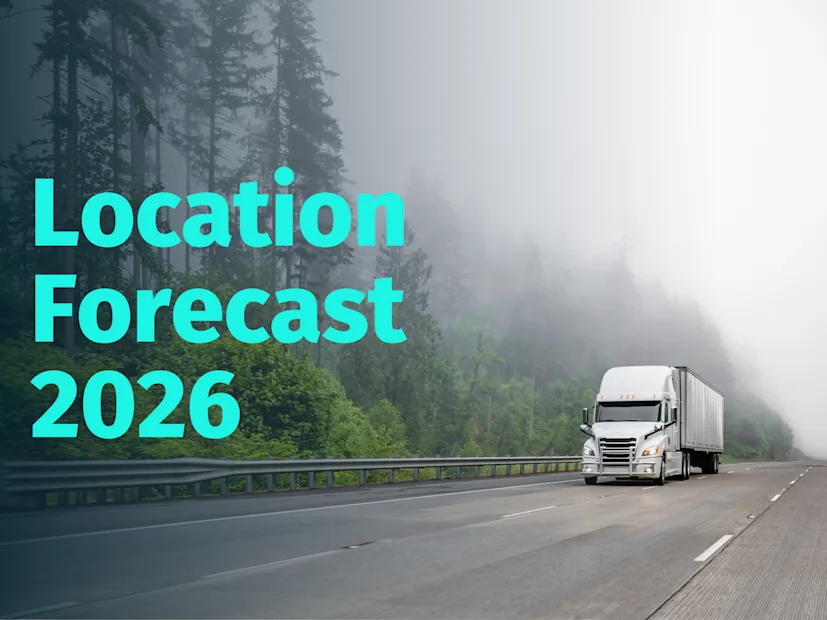
From more intelligent vehicle automation to better pedestrian protection, technology is rapidly changing the landscape of our roads. For the better.
HERE360 explores some of the road safety trends set to shape the future of transportation.
EuroNCAP, which governs the safety testing of cars, trucks and vans in Europe, will introduce its biggest safety change in 17 years. The new system will assess vehicles across four stages of safety: safe driving, crash avoidance, crash protection and post-crash safety.
EuroNCAP will place greater emphasis on driver monitoring systems, awarding points for technology such as eye and head tracking and systems that adjust driver assistance based on the driver’s state. Extra credit will be given to features that detect alcohol or drug impairment or have the ability to stop the vehicle if the driver becomes unresponsive.
Under the new testing regime, crash avoidance systems—such as autonomous emergency braking and lane support—will be verified to reflect real-life scenarios involving pedestrians, cyclists and motorbikes.
And crash protection tests will also be upgraded to meet more stringent rules with new scenarios and pedestrian protection requirements, and stricter protocols for electric cars and their batteries.
The changes are designed to reflect increasingly complex modern car technology and push automakers to prioritise not just structural crash performance, but real-time prevention, occupant wellbeing and survivability.
Tougher restrictions for light commercial vehicles (LCV) are coming into force next year to improve safety. Vans and trucks between 2.5 and 3.5 metric tons being used for cross-border freight transportation will be required to install smart tachographs under new EU rules.
Driving times, rest periods, border crossings and vehicle movements will be digitally recorded and monitored, bringing the same safety and compliance standards to the LCV sector as have been applied in heavy goods vehicles.
The smart tachographs use GNSS-based positioning and remote data transmission to allow authorities to track and monitor vehicles remotely in real time. The intention behind the stricter rules is to help prevent driver fatigue and avoid violating strict limits on driving hours, breaks and rest periods.
Bosch and CARIAD (Volkswagen’s software arm) are developing an intelligent AI system that allows driver assistance systems to act as naturally as human drivers. The technology is already being tested in the Volkswagen ID.Buzz and Audi Q8 and is expected to be production-ready by mid-2026.
The new AI-based software stack for Level 2 and Level 3 autonomous driving will paint a picture of the road ahead. Fusing sensor data from cameras and radar with HD-level map and location data, it will interpret urban traffic and predict road user behavior.
As well as object recognition, the AI-enhanced system will have better decision-making capability to allow for safer automated control of acceleration, steering and braking.
The technology is planned to be integrated into the Volkswagen Group’s software-defined vehicle architecture. Bosch will also make this technology available to other manufacturers worldwide, signaling a significant push toward scalable automated driving safety systems in mass market cars.
South Korea plans to unleash 100 fully autonomous cars onto the roads of a yet-to-be-announced city next year. The government initiative is part of a plan to have Level 4 autonomous driving technology on the nation’s roads by 2027 and compete with the United States and China.
The vehicles deployed next year will be used to collect driving data that will help accelerate the rollout. Under the plans, local mayors and governors will be given powers to designate autonomous cars testing zones and expand driverless bus trials in rural areas.
In addition, South Korea is expanding its pilot zone for autonomous freight trucks from four roads to 44, covering more than 5,000km. Hyundai has already successfully completed a platoon trial to demonstrate emergency braking and vehicle-to-vehicle communication. In addition, South Korea aims to commercialize robot delivery on its streets.
Powering this next wave of autonomous and connected vehicles is mapping and location intelligence. For example, Navigation on Autopilot (NOA) is a technology that’s bridging the gap between in-car navigation with advanced driver assistance systems. This intelligent co-pilot uses detailed maps and driver-assistance features to allow drivers to take their hands off the wheel, even if their eyes have to remain on the road ahead.
“The trend towards NOA is moving the industry in the direction of HERE’s ‘sweet spot’—the place where our unified layers of location data, including accurate, regularly updated and high-definition digital maps come together with automated driving systems,” said Gino Ferru, Senior Vice President at HERE.
Another new innovation speeding up the progress of software-defined vehicles (SDV) is the HERE SDV Accelerator, developed in collaboration with AWS. For automakers, the SDV Accelerator gives them practical guidance, ready-to-use code and a comprehensive software architecture to scale automated solutions faster.
Of course, seeing is believing, and these software solutions are only as powerful as their input. Step forward HERE ADAS Map and HERE UniMap.
In a recent survey conducted by HERE and Omdia, a unified map stood out as a clear necessity and focus for an SDV future, while ADAS maps are essential in enhancing advanced driver-assistance systems, combining location technology, maps and data for assisted and automated driving.
As Maite Bezerra, Senior Principal Analyst at Omdia, put it: "Location is what gives you context, and context is what makes these devices smart."

Ian Dickson
Contributor
Share article
Ian Dickson — 21 September 2026
Louis Boroditsky — 22 July 2026
Louis Boroditsky — 17 July 2026
Get the latest on location technology, AI innovation and HERE product updates delivered straight to your inbox.
What you'll get:
Expert insights on agentic AI, spatial reasoning and location technology
Early access to HERE product updates, demos and resources
Practical guidance on building location-aware AI that works in the real world