
Connected Driving
EV interest is rising. Now the ownership experience must deliver
Ian Dickson — 21 September 2026
5 min read
12 March 2026
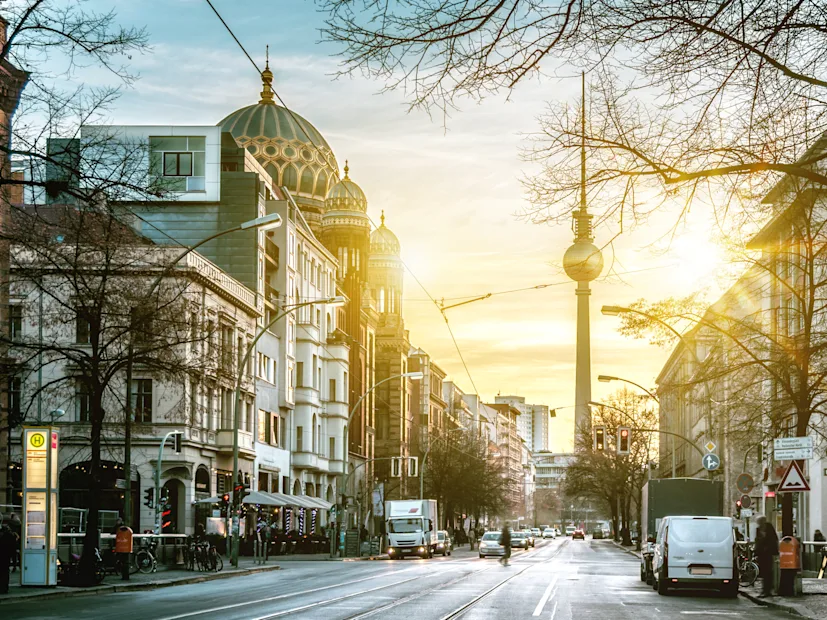
For Thibault Castagne, CEO and Co-Founder of Vianova, traffic management is about far more than keeping cars moving smoothly. It’s about protecting people.
"When you meet crash survivors or the parents of those who didn't make it, you realize the real-world impact of your work," said Castagne. "As much of a struggle as it is to get through all the hurdles, you know you're serving the public good."
That sense of responsibility is what drives Vianova’s work with HERE Technologies and the Helmholtz Institute, an urban research center working closely with the City of Berlin.
Together, they are taking on a tough but urgent challenge: rethinking historic, car-first streets and turning them into places that feel safer and more livable for everyone who uses them, not just drivers.
Berlin’s city leaders have a clear goal to make Germany’s capital a nicer, more livable place to be. That means quieter streets, fewer cars and more people getting around by bike or on foot. Turning that foresight into reality takes more than good intentions. It requires a clear picture of how people actually move through the city day to day.
"One of the challenges today that municipalities or public authorities have is that it's very difficult for them to handle large amount of mobility data sets," said Castagne.
Without the right systems in place, making sense of “big data”—like live traffic speeds, crash hotspots and congestion patterns—becomes incredibly tough. That leaves planners relying on educated guesses instead of solid evidence when deciding where measures such as lower speed limits or street closures will make the biggest difference.

With insights from HERE Technologies and Vianova, Berlin is reimagining its roads to prioritize safety and livability for all.
Vianova helps cities make sense of the mountain of transportation data they already have. Its software pulls together information on everything from live traffic conditions to shared transportation like e-scooters and taxis, giving city teams a clearer picture of how their streets are really being used.
"In a nutshell, we provide a software solution to municipalities and infrastructure managers who aggregate data and provide traffic and mobility management tools," Castagne said.
Handling huge amounts of data: it can absorb live data streams that would normally be too big or messy for standard city systems to cope with. |
Turning numbers into maps: instead of spreadsheets, users see intuitive visual maps that highlight issues like crash-prone junctions or speeding hotspots. |
Making data easier to use: AI tools let users create reports and charts just by asking questions, opening up complex analysis to people without specialist skills. |
Berlin’s aim is similar to Barcelona’s “superblocks” idea: redesigning neighbourhoods to cut through-traffic and give more space back to people. The study will run until March 31st, 2028, allowing the impact of these changes to be measured properly, not just once, but continuously.
"They're essentially looking to plan and then measure the efficiency of traffic calming measures," said Castagne. "How do you reduce both actually the space that cars take, but also the speed that cars drive around the city?"
Vianova uses two specific data feeds from HERE:
HERE Traffic Analytics: provides computed data on traffic volume, travel times and speed.
HERE Probe Data: raw GPS traces from connected vehicles and mobile apps.
This data allows planners to evaluate critical safety metrics, such as the "85th percentile of speed," which helps identify segments where speeding is excessive and dangerous.
Looking ahead, this partnership is about much more than easing congestion or smoothing traffic flow.
“In cities, the goal is Vision Zero,” said Castagne. “That means no fatalities, and no one seriously injured. For me, that’s the number one promise of this technology.”
“We’re trying to make life easier for people,” he added. “These tools shouldn’t be something citizens push back against. They should genuinely help make day-to-day life safer and simpler for everyone.”

Louis Boroditsky
Managing Editor, HERE360
Share article
Ian Dickson — 21 September 2026
Louis Boroditsky — 22 July 2026
Louis Boroditsky — 17 July 2026
Why sign up:
Latest offers and discounts
Tailored content delivered weekly
Exclusive events
One click to unsubscribe